

Music // History // Identity
The Biography of
Randy Bryan Moore
I. The Origins Randy Bryan Moore was born on July 4, 1990, at 2:10 p.m. in Hartsville, South Carolina. It was a Wednesday. His arrival was marked by a heavy silence amidst the Independence Day celebration; his father, Randy Wayne Moore, had died in an accident just one month prior at the age of 24. Randy’s mother was a widow at 19 before she was even a parent.
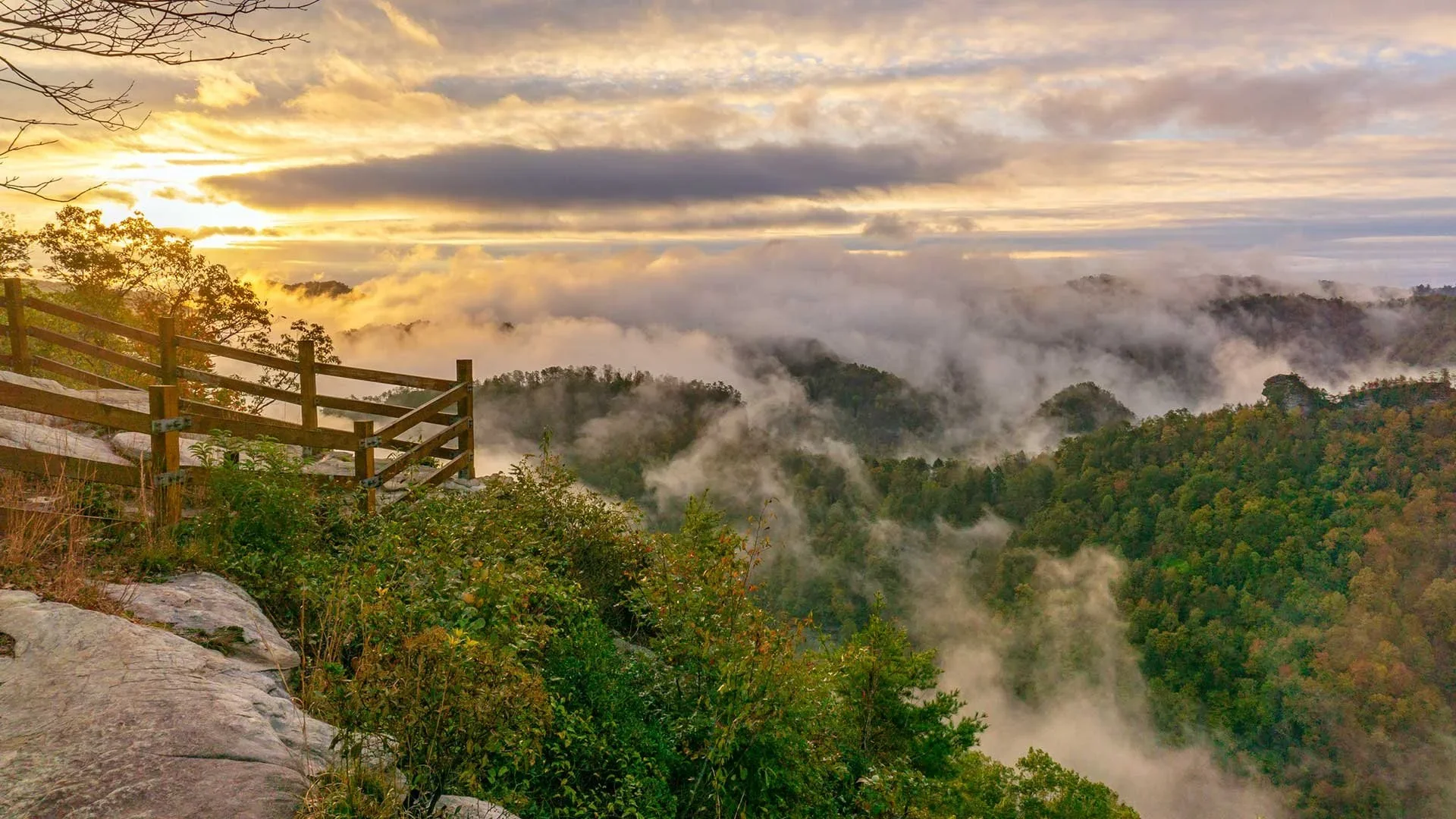
His history begins long before that summer afternoon. On his mother’s side, his family came to the Pee Dee region during the Great Depression through a government resettlement program, planting roots in the sandy soil of Ashwood that would eventually be divided among generations. On his father’s side, the roots are ancient. The Moores were Scots-Irish stock who traced a restless path from Scotland to County Antrim in Northern Ireland, then to Pennsylvania. They were among the first American settlers, eventually migrating south into the heart of Appalachia. For 250 years, they remained in the mountains—a lineage of beekeepers, tree doctors, coal workers, and mountain mystics.
The two lines collided by chance in the Vietnam era. Randy’s maternal grandfather, Warren Bryan ("Poppy")—a gifted mechanic—was stationed near Appalachia when he found himself at a cockfight. There, he met Radford of Pine Mountain, Randy Wayne’s father. The two patriarchs met in the betting ring long before their children would ever meet.
II. The Swamp and The Well Randy was raised in the Ashwood area of Bishopville, a landscape of corn, wheat, and cotton fields bordering the Scape Ore Swamp, known for the legend of the Lee County Lizard Man. In the absence of a father, he was raised by his mother and maternal grandparents, Judy and Brian ("Nanny and Poppy").
While Nanny, a church singer, pulled him onto the stage for recitals by age six, his true musical awakening was solitary. Digging through discount end-caps at the local Revco, Randy bought Mozart CDs. Listening to them triggered a synesthetic reaction; the music "lit up" his brain. He became a hyper-focused autodidact, learning to sit at the instrument and enter a trance state he calls "pumping the well"—emptying the ego to let the music rush in. He often hears entire songs in the hypnagogic state between sleep and waking, racing to capture the melody before the logic of the day erases it.
III. The Wilderness Years Adolescence brought a shift in frequency. The country staples of his youth—Reba, Dolly, The Judds—gave way to the distortion of Nirvana. In Kurt Cobain, Randy found a mirror: a left-handed poet and outsider who stood against bigotry.
But the music could not hold back the tide of tragedy. The loss of his mentor, music teacher Ms. Bailey, in a freak accident was followed swiftly by the death of his grandmother, Nanny, on her 62nd birthday. She had been battling severe autoimmune issues and "cheating shots" to stay alive, but her passing marked the definitive end of Randy’s childhood.
It was a period of profound upheaval. Following his first hospitalization and his parents' divorce, Randy found himself displaced, living with his grandparents and sleeping on a bed tucked behind their couch. Later, seeking escape from a stepfather who pushed sports over music, he moved into a cinderblock house in a rural field with his Aunt Margie and Cousin Gary. The house had no central heat, but possessed a tin roof that sang under the rain. Here, wandering the woods, he forged his internal world.
He eventually found refuge living with his best friend, Britton. Bonding over everything from the Spice Girls to survival, they weathered a house fire and lived in a home plagued by severe poltergeist activity—experiences that cemented Randy’s belief in the "block universe." He came to understand that reality is not solid; rather, every part of the atom down to the subatomic components are just probabilities in a field.
IV. The Education Randy dropped out of high school, spending his "gap years" immersing himself in the films of Gus Van Sant and the literature of Sylvia Plath and William S. Burroughs. Musically, he was "ruptured" by the true folk poetry of Joanna Newsom and the raw confessionals of Tori Amos.
His return to academia began briefly at SCAD before he transferred to the University of South Carolina. There, he served as a Student Senator and graduated with Leadership Distinction in Civic Engagement. He was named the Undergraduate Social Work Student of the Year, allowing him to complete his Master of Social Work with Advanced Standing in Organizations and Communities in just one year.
V. The Dual Life For the next decade, Randy lived two distinct lives. The Musician: He fronted the indie surf-pop band Dead Surrfff, touring and exploring the tension between folk storytelling and electronic sound design. (His concert history reflects this range: his first show was Nine Inch Nails, his second was Jewel). The Operative: Driven to fix broken systems, he built a formidable resume:
Researcher: Working with Dr. Christina Andrews on the Affordable Care Act and substance use disorders.
Advocate: Fighting for justice at the South Carolina Appleseed Legal Justice Center under Sue Berkowitz.
Campaigner: Bird-dogging presidential candidates for AARP in 2016 (attending rallies for Trump, Clinton, Sanders, Cruz, and Kasich).
The Senate: Serving as an Outreach Representative for Senator Mark Warner, covering 40 counties in Virginia.